NNliterary & philosophical essays · Vol. I
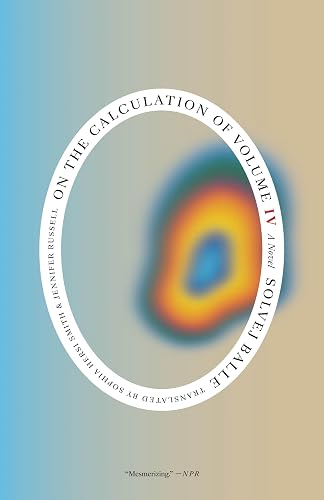
Cover of On the Calculation of Volume - IV
From the library

On the Calculation of Volume - IV

Solvej Balle · 2026
readnovel

Responses · 2

Response · on p. 3Aug 25, 2026
Of Atmosphere

There is something happening spatially in the beginning of this book. The stranded few of the “anastrophe”, sent back to the same day again and again, are immediately blurred, whisps of particles occupying a shared volume. Like molecules of a gas, they mix and almost instantly merge.

Read the response →
Response · on p. 109Aug 28, 2026
Peopling

This reemergence from a Rift Valley of progressive time. Peopling the earth again, but filling an emptiness of time instead of space. Groups that form and spread out, settle and then migrate. A center of migration forms, an axis. This is how I think of the Neanderthals. They move in bands that forms through affinities and shared ideas about ideal climates and optimal resources. Kinship forms out of these welded groups. But nomads come back to some central point from time to time. They gather for discussion, to share questions and answers that have come up in the group. The urgency to share and acquire knowledge. There is also some magnetic pole in us that seeks out a center point. Orbiting is falling forever towards something but never hitting it. Nomadic families gather in a green valley, their herds mingling separately on the hillsides. Carpets spread on the grass as people talk and sing and dance before moving off again.

Read the response →
Highlights · 11

…maybe we were also surprised by the sudden commotion in the house: a flurry of people, of feet being wiped on the mat, of jackets and scarves being hung on hooks in the hall, of voices and sentences filling the air, questions about the house and how many we are and how long we have lived here.
But now Ralf did light a fire and we sat there in the drawing room. With names and explanations swirling in the air around us. With a welter of words, with gesticulations and stories…
p. 3
It is easy enough to tell them apart. The bodies on the sofas and armchairs. The faces belonging to the bodies. The voices belong- ing to the faces. You listen first to one, then to another, and each time you turn your gaze toward one of the voices, you find that it belongs to a face and to a body with a hand behind its head or a way of leaning on the arm of the sofa. But then you realize that you have a hand behind your own head or that you are leaning in exactly the same way, and then someone else is telling a story and someone else again is borrowing a gesture. A leg is bent and drawn up onto a sofa, a pair of hands flits about, illustrating a point, and moments later another pair of hands flits and another leg is drawn up onto an armchair. It is warm in the room and someone picks up a sentence and repurposes it, because even though you quickly learn to recognize the voices and match them to faces and bodies, their movements ripple through the group, sentences are passed along, and gestures are mimicked or echoed, sometimes it’s just the twitch of an eyebrow or the tilt of a head traveling quietly from one person to the next.
p. 5
It’s strange to feel this sense of kinship simply because you have lived in the same house, I noted, and then we spoke about the garden furniture, the sounds of night, and the small market where we both bought fruits and vegetables. We spoke about the moon’s shadows. I don’t know why I remember it so clearly. I had wondered why the moonlight had been so bright.
p. 66
Our house has become a reception center, a gathering place, a meeting point. People arrive alone or in small groups. Some ar- rive very quietly, as if they have slipped unseen through the back door. Others arrive like peacocks, strutting through the gate and up the driveway as if a red carpet had been rolled out all the way to the front door. Some leap into focus the moment we meet them, and within an hour, you feel like you know them. Others take longer to emerge from the background, a gradual reveal, and some you barely notice until suddenly they unfold-offering a story, an idea, a gesture, an experience-and all at once, you see them in color, brightly lit. They arrive with all their stories. With their explanations and patterns. With their sorrow and confusion. By bike or car, and some on foot. They come because they have spotted a poster or two, their curiosity piqued. But these days, more and more come after crossing paths with one of us someone who has lived here or visited, and who mentioned the house and all our meetings. How you’re always welcome at the meetings, even if you don’t live here. We try to get to know everyone, but there are many of us, and often people are just passing through. Some move in and stay for good, others meet here, then find a place to rent together in town. Some only come for the meetings, others live nearby and make a point of regularly dropping in. There’s a group in Lugano, there’s Gita’s group in Liège, and Aikaterini Erb’s group in Osnabrück.
Should we be afraid to have strange opinions? But who doesn’t believe strange things in such a strange world?
p. 119

+5 more highlights withheld.